
Peter the Great
-
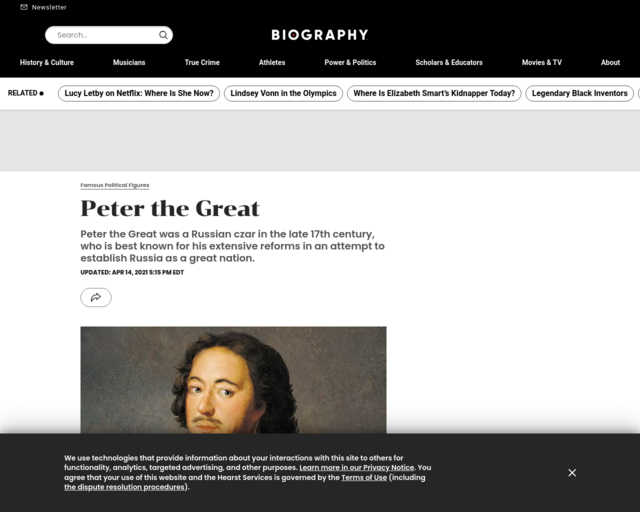 Peter the Great - Accomplishments, Reforms & Death
(opens in new window)
Peter the Great was a Russian czar in the late 17th century, who is best known for his extensive reforms in an attempt to establish Russia as a great nation.
Peter the Great - Accomplishments, Reforms & Death
(opens in new window)
Peter the Great was a Russian czar in the late 17th century, who is best known for his extensive reforms in an attempt to establish Russia as a great nation.
-
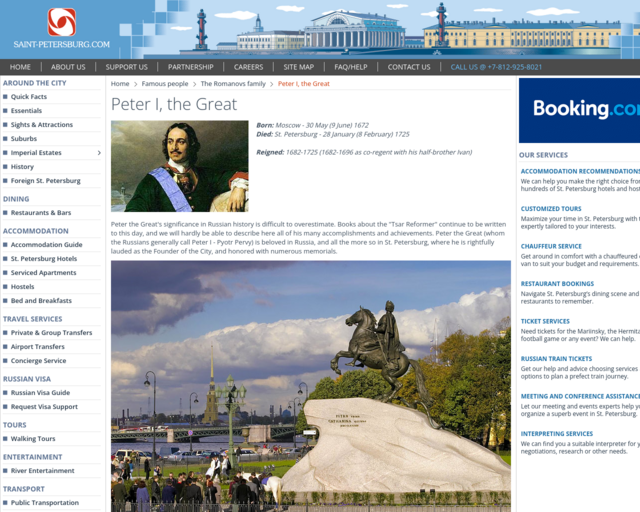 Biography of Peter the Great of Russia
(opens in new window)
Life and history of Peter I of Russia. Read the biographies of Peter the Great and other rulers of Russia in St. Petersburg.
Biography of Peter the Great of Russia
(opens in new window)
Life and history of Peter I of Russia. Read the biographies of Peter the Great and other rulers of Russia in St. Petersburg.
-
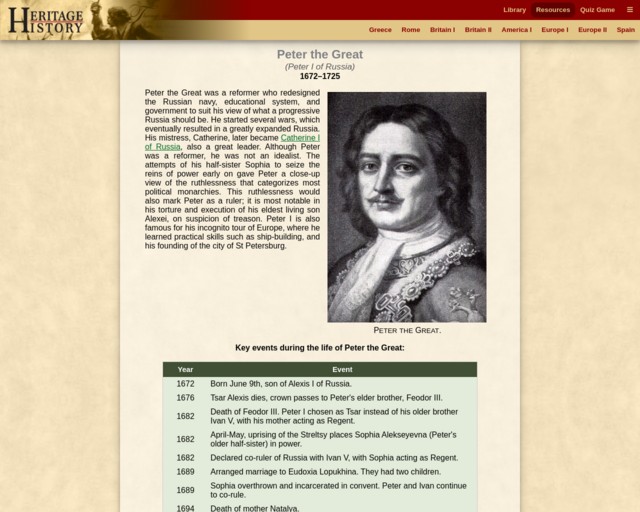 Peter the Great: (Peter I of Russia): 1672–1725
(opens in new window)
Peter the Great was a reformer who redesigned the Russian navy, educational system, and government to suit his view of what a progressive Russia should be. He started several wars, which eventually resulted in a greatly expanded Russia.
Peter the Great: (Peter I of Russia): 1672–1725
(opens in new window)
Peter the Great was a reformer who redesigned the Russian navy, educational system, and government to suit his view of what a progressive Russia should be. He started several wars, which eventually resulted in a greatly expanded Russia.
-
Peter I, the Great
(opens in new window)
Peter the Great's significance in Russian history is difficult to overestimate. Books about the "Tsar Reformer" continue to be written to this day, and we will hardly be able to describe here all of his many accomplishments and achievements.
Catherine the Great
-
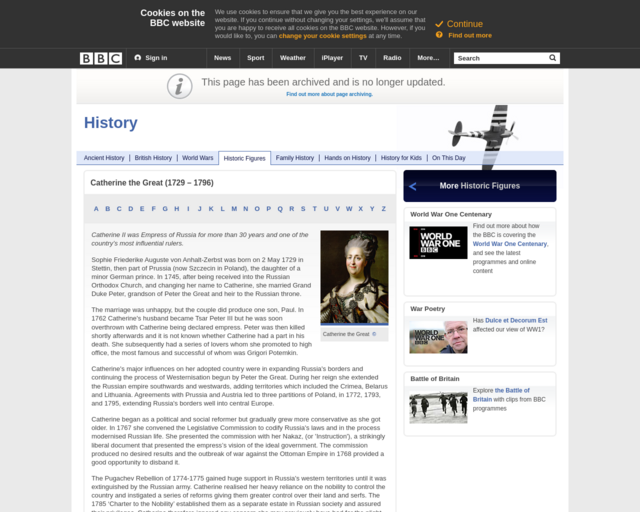 BBC - History - Catherine the Great
(opens in new window)
Catherine II was Empress of Russia for more than 30 years and one of the country’s most influential rulers.
BBC - History - Catherine the Great
(opens in new window)
Catherine II was Empress of Russia for more than 30 years and one of the country’s most influential rulers.
-
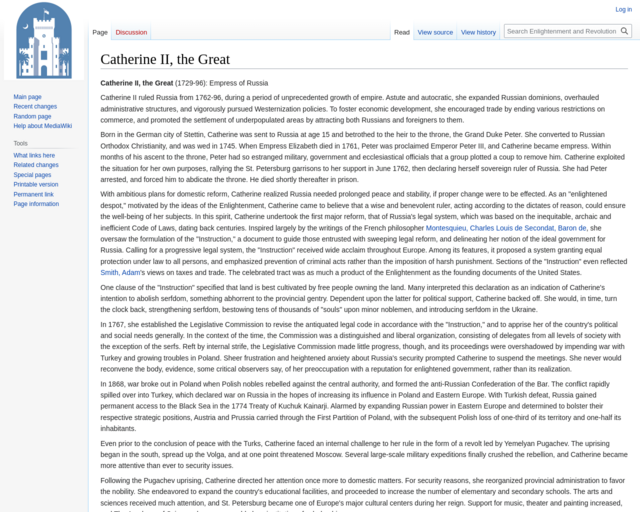 Catherine II, the Great - Enlightenment Revolution
(opens in new window)
<b>See the main page for citation information</b> -- http://enlightenment-revolution.org/index.php/Main_Page
Catherine II, the Great - Enlightenment Revolution
(opens in new window)
<b>See the main page for citation information</b> -- http://enlightenment-revolution.org/index.php/Main_Page
-
 How did Catherine the Great’s reign shape Imperial Russian history?
(opens in new window)
Professor Andrew Kahn FBA explores the ways that Catherine the Great impacted Imperial Russian history.
How did Catherine the Great’s reign shape Imperial Russian history?
(opens in new window)
Professor Andrew Kahn FBA explores the ways that Catherine the Great impacted Imperial Russian history.
-
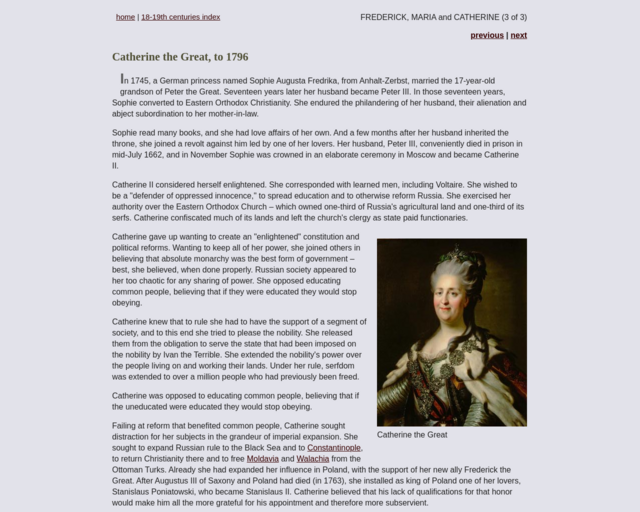 Catherine the Great, Russian Empress
(opens in new window)
<b>Author is: Frank E. Smitha --- Website name is: <i>Macro-History : World History</i></b> (no publisher)
Catherine the Great, Russian Empress
(opens in new window)
<b>Author is: Frank E. Smitha --- Website name is: <i>Macro-History : World History</i></b> (no publisher)
-
 Catherine the Great (Zwingle and Brimberg)
(opens in new window)
There is no single great event that defines Catherine's reign, no epic deed that still excites admiration. Even in her lifetime Catherine had furious critics, who saw her as a bloodstained usurper and opportunist; she also had passionate defenders ... <b>(Indexed on page 92 but on page 114 in Gale viewer) Can be viewed here if unable to find in database</b> -- drive.google.com/file/d/19lZ3213m71MPIfrrb0SGV3MMF6r3wgK5/view?usp=sharing
Catherine the Great (Zwingle and Brimberg)
(opens in new window)
There is no single great event that defines Catherine's reign, no epic deed that still excites admiration. Even in her lifetime Catherine had furious critics, who saw her as a bloodstained usurper and opportunist; she also had passionate defenders ... <b>(Indexed on page 92 but on page 114 in Gale viewer) Can be viewed here if unable to find in database</b> -- drive.google.com/file/d/19lZ3213m71MPIfrrb0SGV3MMF6r3wgK5/view?usp=sharing
French Revolution
-
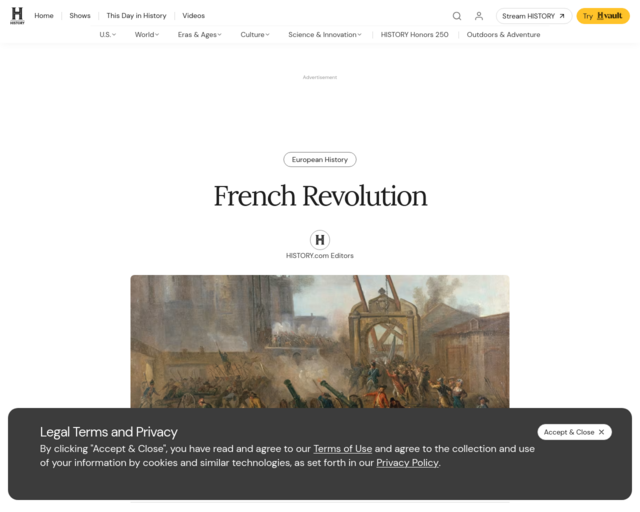 French Revolution
(opens in new window)
The French Revolution was a watershed event in world history that began in 1789 and ended in the late 1790s with the ascent of Napoleon Bonaparte.
French Revolution
(opens in new window)
The French Revolution was a watershed event in world history that began in 1789 and ended in the late 1790s with the ascent of Napoleon Bonaparte.
-
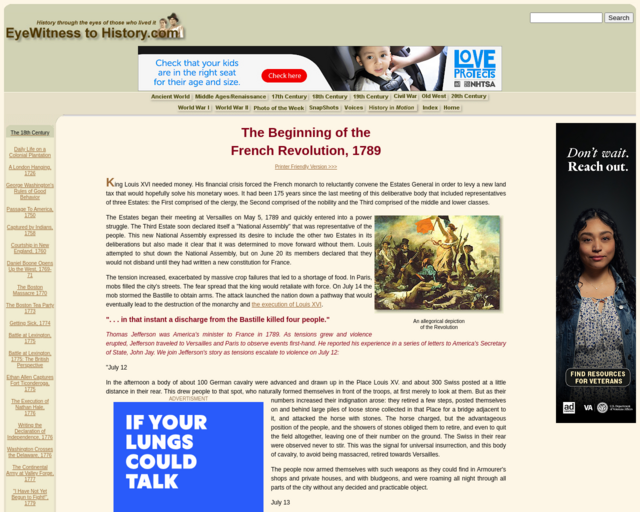 The Beginning of the French Revolution, 1789
(opens in new window)
The Estates began their meeting at Versailles on May 5, 1789 and quickly entered into a power struggle. The Third Estate soon declared itself a "National Assembly" that was representative of the people.
The Beginning of the French Revolution, 1789
(opens in new window)
The Estates began their meeting at Versailles on May 5, 1789 and quickly entered into a power struggle. The Third Estate soon declared itself a "National Assembly" that was representative of the people.
-
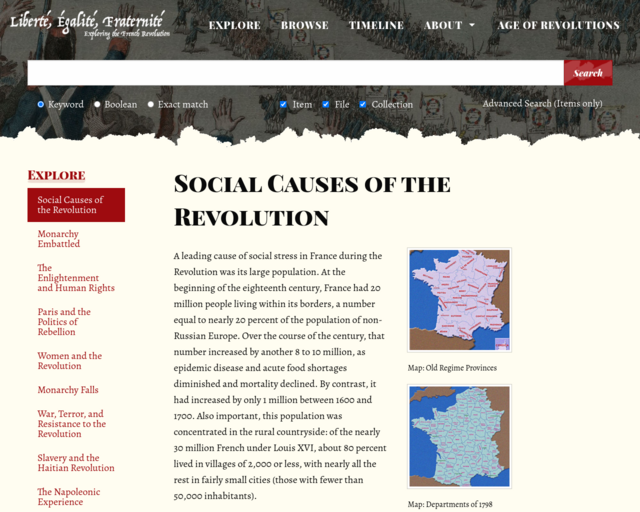 Social Causes of the Revolution
(opens in new window)
A leading cause of social stress in France during the Revolution was its large population. At the beginning of the eighteenth century, France had 20 million people living within its borders
Social Causes of the Revolution
(opens in new window)
A leading cause of social stress in France during the Revolution was its large population. At the beginning of the eighteenth century, France had 20 million people living within its borders
Napoleon Bonaparte
-
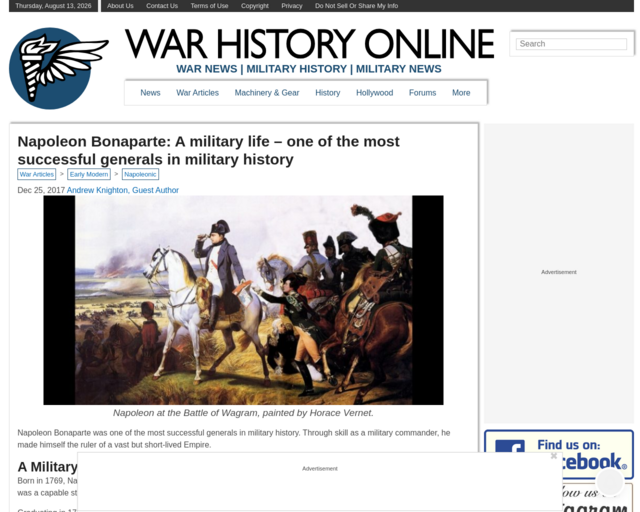 Napoleon Bonaparte: A military life – one of the most successful generals in military history
(opens in new window)
<b>Use the search bar for more articles on this site</b>
Napoleon Bonaparte: A military life – one of the most successful generals in military history
(opens in new window)
<b>Use the search bar for more articles on this site</b>
-
 Was Napoleon evil?
(opens in new window)
<b>You may need to create a free account to view this article. Log in with Google.</b>
Was Napoleon evil?
(opens in new window)
<b>You may need to create a free account to view this article. Log in with Google.</b>
-
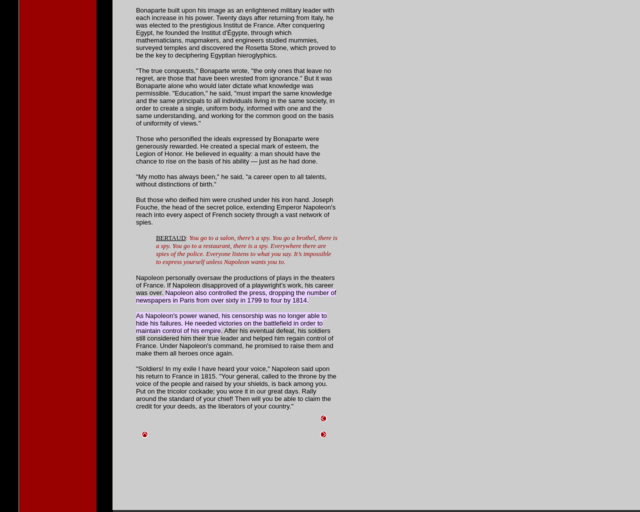 Napoleon: The Man and the Myth
(opens in new window)
Bonaparte built upon his image as an enlightened military leader with each increase in his power.
Napoleon: The Man and the Myth
(opens in new window)
Bonaparte built upon his image as an enlightened military leader with each increase in his power.
-
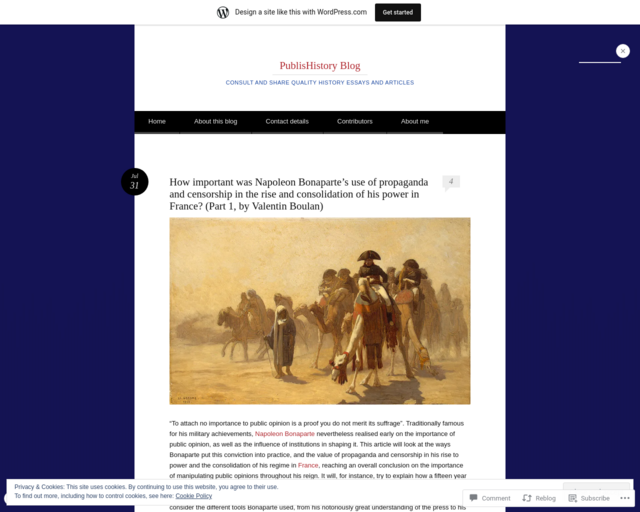 Part 1 - How important was Napoleon’s use of propaganda and censorship in the rise of his power in France?
(opens in new window)
Traditionally famous for his military achievements, Napoleon Bonaparte realised early on the importance of public opinion, as well as the influence of institutions in shaping it.
Part 1 - How important was Napoleon’s use of propaganda and censorship in the rise of his power in France?
(opens in new window)
Traditionally famous for his military achievements, Napoleon Bonaparte realised early on the importance of public opinion, as well as the influence of institutions in shaping it.
-
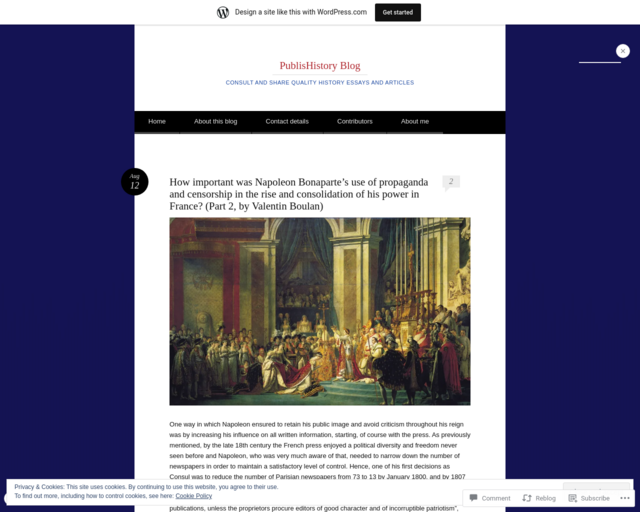 Part 2 - How important was Napoleon’s use of propaganda and censorship in the rise of his power in France?
(opens in new window)
One way in which Napoleon ensured to retain his public image and avoid criticism throughout his reign was by increasing his influence on all written information, starting, of course with the press.
Part 2 - How important was Napoleon’s use of propaganda and censorship in the rise of his power in France?
(opens in new window)
One way in which Napoleon ensured to retain his public image and avoid criticism throughout his reign was by increasing his influence on all written information, starting, of course with the press.
Haitian Revolution
-
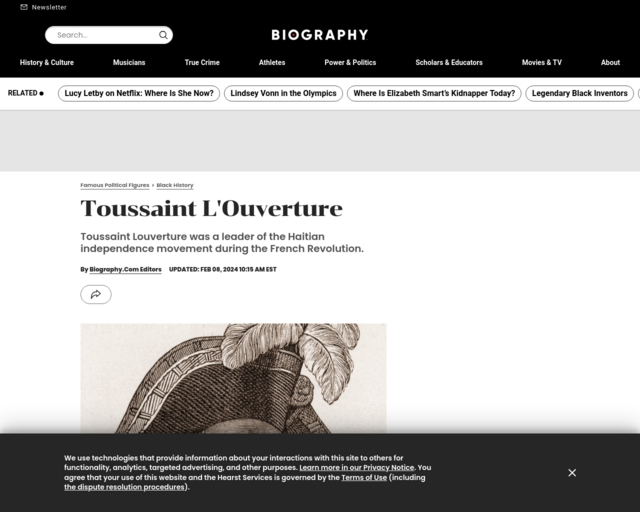 Toussaint L'Ouverture
(opens in new window)
François Toussaint L'Ouverture was a former Haitian slave who led the only successful slave revolt in modern history. Standing steadfastly, he fought to end slavery and gain Haiti’s independence from European powers.
Toussaint L'Ouverture
(opens in new window)
François Toussaint L'Ouverture was a former Haitian slave who led the only successful slave revolt in modern history. Standing steadfastly, he fought to end slavery and gain Haiti’s independence from European powers.
-
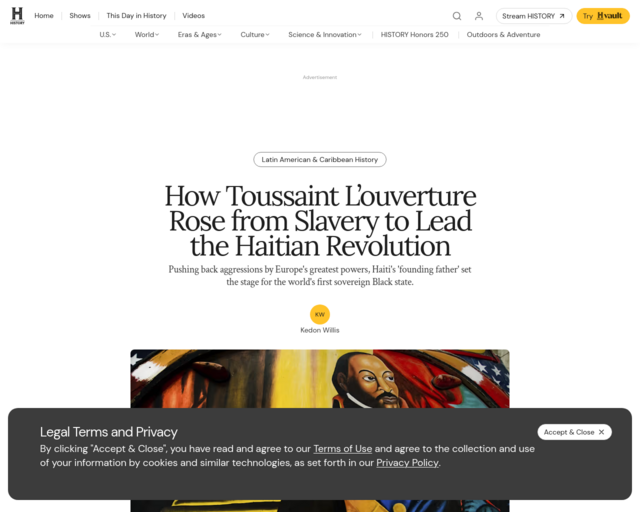 How Toussaint L'ouverture Rose from Slavery to Lead the Haitian Revolution
(opens in new window)
As a general, Toussaint led his forces to victory over the planter class—and thousands of invading French troops. But that was only the start. Navigating the complex, ever-shifting politics of dueling colonial powers, he successfully repelled the aggressions of Europe’s mightiest nations.
How Toussaint L'ouverture Rose from Slavery to Lead the Haitian Revolution
(opens in new window)
As a general, Toussaint led his forces to victory over the planter class—and thousands of invading French troops. But that was only the start. Navigating the complex, ever-shifting politics of dueling colonial powers, he successfully repelled the aggressions of Europe’s mightiest nations.
-
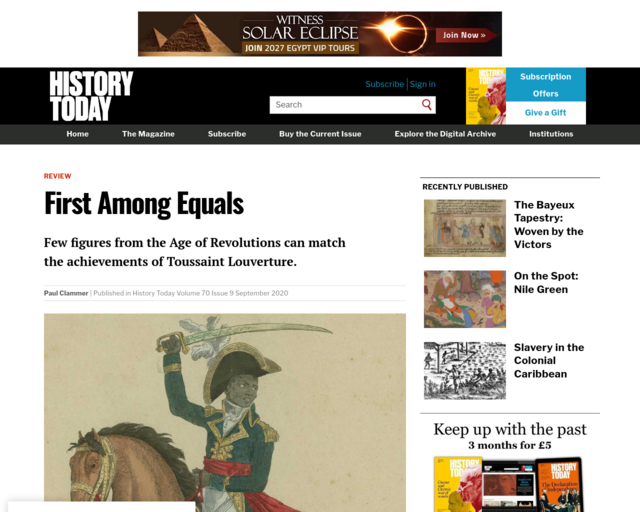 First Among Equals: Few figures from the Age of Revolutions can match the achievements of Toussaint Louverture
(opens in new window)
Few historical figures can have made their introduction to the public sphere in quite so stylish a manner as Toussaint Louverture
First Among Equals: Few figures from the Age of Revolutions can match the achievements of Toussaint Louverture
(opens in new window)
Few historical figures can have made their introduction to the public sphere in quite so stylish a manner as Toussaint Louverture
-
 Slavery: History & Memory
(opens in new window)
SEARCH ~ "Louverture" site:https://slaveryandremembrance.org/articles/ ~ to find pages where he is mentioned and CTRL F on those pages for specific references.
"By 1793, he had added “Louverture” (French for “opening”) to his name, presumably for his skill in finding or creating openings in enemy lines."
Slavery: History & Memory
(opens in new window)
SEARCH ~ "Louverture" site:https://slaveryandremembrance.org/articles/ ~ to find pages where he is mentioned and CTRL F on those pages for specific references.
"By 1793, he had added “Louverture” (French for “opening”) to his name, presumably for his skill in finding or creating openings in enemy lines."
-
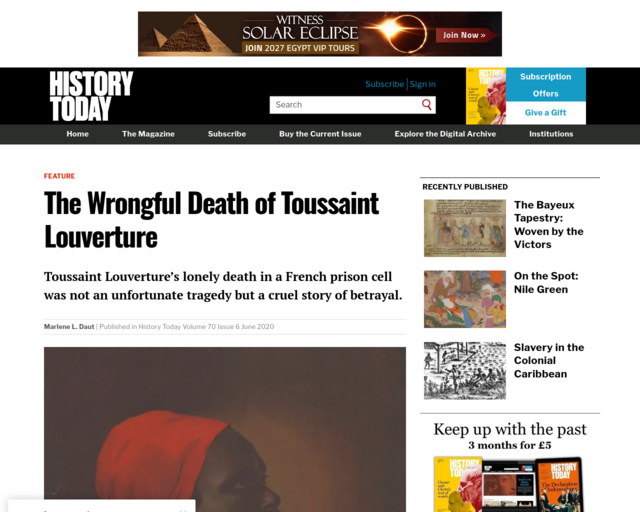 The Wrongful Death of Toussaint Louverture
(opens in new window)
On the morning of 7 April 1803, Toussaint Louverture, leader of the slave insurrection in French Saint-Domingue that led to the Haitian Revolution, was found dead by a guard in the prison in France where he had been held captive for nearly eight months.
The Wrongful Death of Toussaint Louverture
(opens in new window)
On the morning of 7 April 1803, Toussaint Louverture, leader of the slave insurrection in French Saint-Domingue that led to the Haitian Revolution, was found dead by a guard in the prison in France where he had been held captive for nearly eight months.
-
 The Other Revolution: Haiti, 1789-1804
(opens in new window)
Each image here links to the actual primary source document in the original French. Documents can be located in translated form in other primary source resources.
The Other Revolution: Haiti, 1789-1804
(opens in new window)
Each image here links to the actual primary source document in the original French. Documents can be located in translated form in other primary source resources.
-
 How did the slave trade end in Britain?
(opens in new window)
Describes the role of numerous individuals involved in the Abolition movement and eventual end to Slave Trade in Great Britain and it's colonies. "The campaign to end slavery [in Haiti] coincided with the uprisings of the French Revolution and the retaliation of enslaved communities in the British colonies."
How did the slave trade end in Britain?
(opens in new window)
Describes the role of numerous individuals involved in the Abolition movement and eventual end to Slave Trade in Great Britain and it's colonies. "The campaign to end slavery [in Haiti] coincided with the uprisings of the French Revolution and the retaliation of enslaved communities in the British colonies."